For patients
Referred by your orthodontist?
You are welcome here. Your orthodontist or dentist has probably already named your procedure. This page explains what it means, what to expect, and how each surgery works.
Orthognathic surgery
Jaw surgery: designed for function.
Orthognathic surgery corrects jaw and facial skeletal discrepancies to improve function, facial balance and overall quality of life.
Does this sound familiar?
Jaw and facial differences can affect more than just how you look. You may experience:
- Difficulty chewing certain foods
- A bite that doesn't fit together properly
- Jaw pain or clicking
- Mouth breathing or sleep issues
- Speech difficulties
- Facial imbalance or asymmetry
- Low self-confidence
- Headaches or neck pain
Understanding your jaws
The upper jaw (maxilla) and lower jaw (mandible) work together to allow you to chew, speak and breathe. When the jaws are not in the ideal position or relationship, it can affect both function and facial appearance. Orthognathic surgery repositions the jaws to achieve a healthier bite, improved function and a more balanced facial appearance.
Common jaw relationship issues
Underbite (Class III), overbite (Class II) and open bite.
When should I seek an evaluation?
If jaw or bite problems affect your function, comfort, health or confidence, an evaluation with an oral and maxillofacial surgeon can help determine if orthognathic surgery is right for you.
What can orthognathic surgery improve?
Better function
Improve chewing, speaking and overall jaw function.
Better health
Improve airway, reduce sleep issues, jaw pain and chronic headaches.
Facial balance
Create a more harmonious, balanced facial profile and symmetry.
Better bite
Achieve a healthy, stable bite that works the way it should.
Confidence
Look and feel your best, with results that can be life-changing.
Long-term stability
Correct the underlying skeletal problem for lasting results.
A typical treatment journey
Comprehensive evaluation
Clinical exam, 3D imaging and bite analysis to create a personalized treatment plan.
Orthodontic preparation
Braces align your teeth and prepare your bite for surgery.
Minimally invasive orthognathic surgery
Surgical repositioning of the jaws through smaller incisions and advanced techniques whenever appropriate.
Finishing orthodontics
Braces fine-tune your bite and details.
Long-term results
Improved function, facial balance, and confidence that lasts.
MIOS
Minimally invasive orthognathic surgery
An advanced approach to jaw surgery using smaller incisions and specialized techniques to minimize tissue trauma, reduce swelling, and accelerate recovery.
To improve accuracy and precision, the surgery can use patient-specific implants: guides and plates designed from a 3D plan of your own anatomy.
TMJ disorders
When jaw pain, clicking or limited movement needs more than observation.
Jaw pain is common, but persistent pain or changes in the way your jaw moves should not simply be ignored.
Common signs and symptoms
- Pain in front of the ear or around the jaw
- Pain or difficulty with chewing
- Clicking or popping of the jaw
- Jaw locking
- Difficulty opening your mouth
- Changes in the way your teeth fit together
- Recurrent swelling around the jaw joint
- Facial pain or headaches associated with jaw function
Understanding your TMJ
The temporomandibular joint connects your lower jaw to your skull. You use it thousands of times each day to speak, chew, swallow and yawn. Inside the joint is a small cartilage disc that helps the jaw move smoothly. TMJ disorders can affect the joint, the disc, the surrounding muscles, or a combination of these, and range from relatively minor problems to advanced conditions involving significant deterioration of the joint.
Not all jaw pain is the same
And not every TMJ disorder requires surgery. The first step is determining the source of your symptoms and selecting treatment based on your individual condition.
When should I seek an evaluation?
Persistent pain, progressive difficulty opening, recurrent locking, changes in your bite, or symptoms that interfere with eating and everyday activities may benefit from specialized evaluation.
The right treatment for the right patient
Conservative care
Many TMJ disorders can be successfully managed without surgery: physical therapy, medications, splint therapy, dietary modification, behavioral changes and other nonsurgical therapies.
Advanced arthroscopy
Minimally invasive treatment of many problems inside the joint, using a tiny camera and specialized instruments through very small incisions. Some procedures that once required open surgery may now be done arthroscopically.
How arthroscopy works →Open joint surgery
Some structural conditions still require direct surgical access to the joint. Treatment is selected based on the underlying problem and may include repair, reconstruction or other procedures.
Total joint replacement
For severe or end-stage joint disease, total joint replacement may be the most appropriate option.
How joint replacement works →The philosophy is simple: use the least invasive approach capable of effectively treating the problem.
Dentoalveolar surgery
Oral surgery, from extractions to implants.
From tooth extractions to dental implants: comprehensive, safe and comfortable care.
Does this sound familiar?
You may have:
- Tooth pain or infection
- Damaged, broken or non-restorable teeth
- Impacted wisdom teeth
- Crowded or extra teeth
- Jawbone problems or abnormalities
- Need for dental implants
- Difficulty chewing or speaking
- Soft tissue lesions or oral pathology
What is treated
Wisdom teeth extractions, dental implants, tooth extractions, bone grafting, soft tissue lesions and pathology, and exposure of impacted teeth.
Comfort and safety
Sedation options, including IV sedation and nitrous oxide, are available for a comfortable experience.
When should I seek care?
If you have pain, swelling, infection, or concerns about your teeth or gums, don't wait. Early treatment can prevent complications and lead to better outcomes.
How the surgery works
See each surgery in 3D, step by step.
Four short explainers: minimally invasive jaw surgery, patient-specific implants, TMJ arthroscopy and total joint replacement.
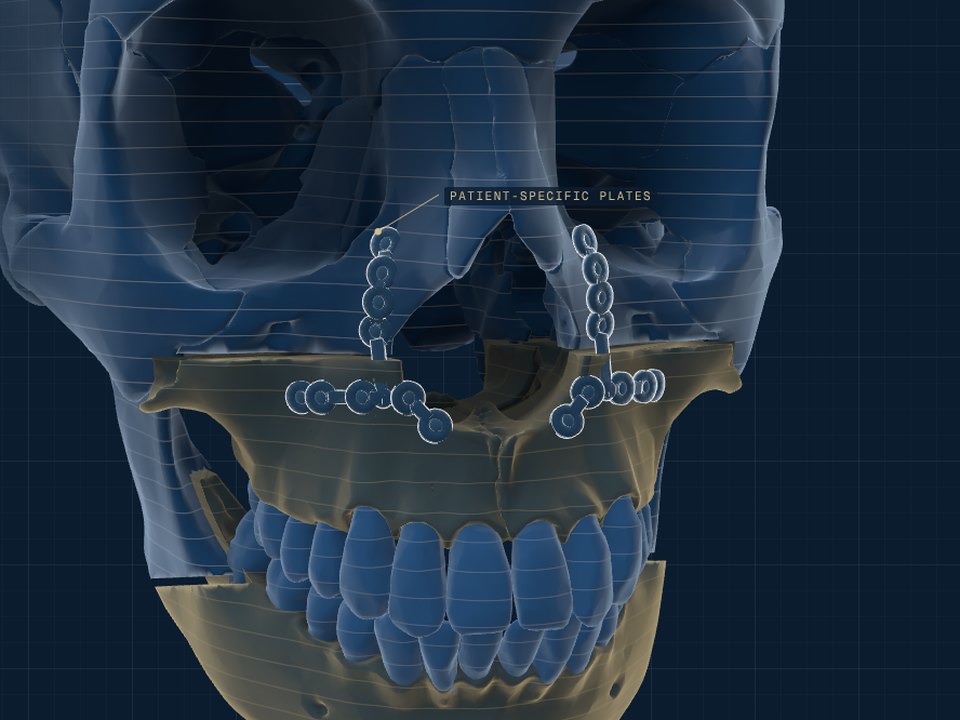
Minimally invasive orthognathic surgery
Jaw surgery through smaller incisions, with guides and plates made for the patient.
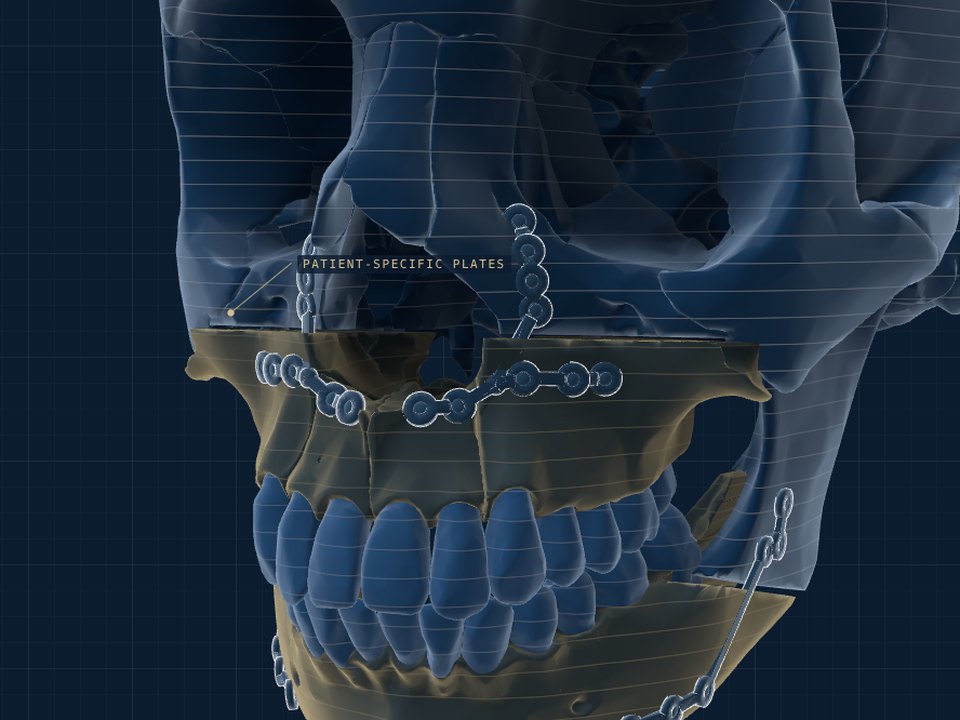
Virtual planning and patient-specific implants
The surgery rehearsed on a 3D model, then guides and plates made to match it.
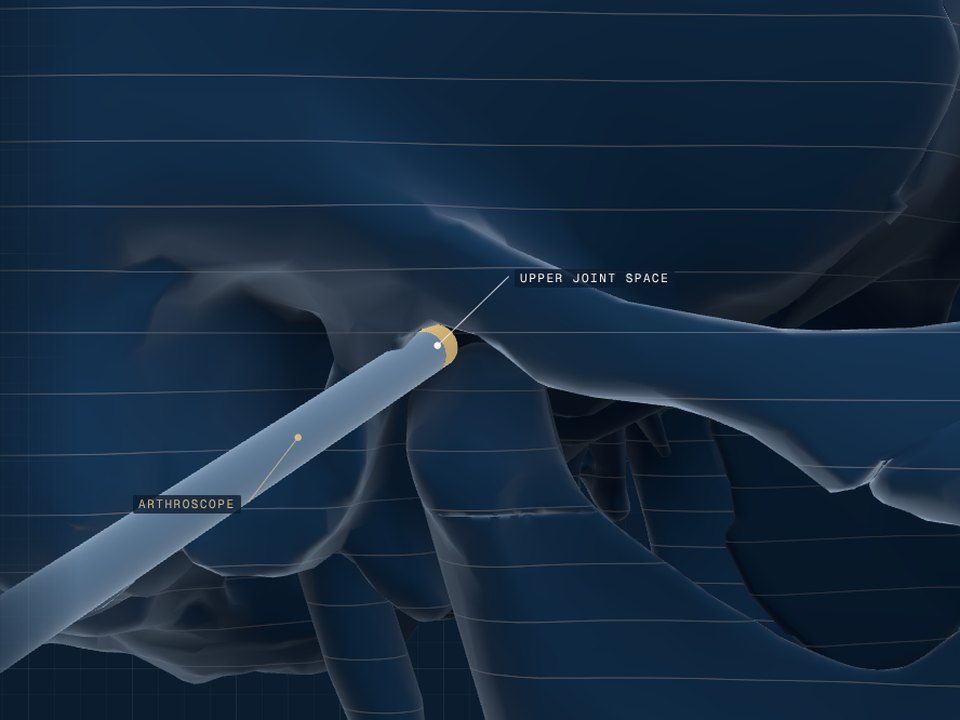
TMJ arthroscopy
A tiny camera and instruments inside the joint, through a very small entry point.
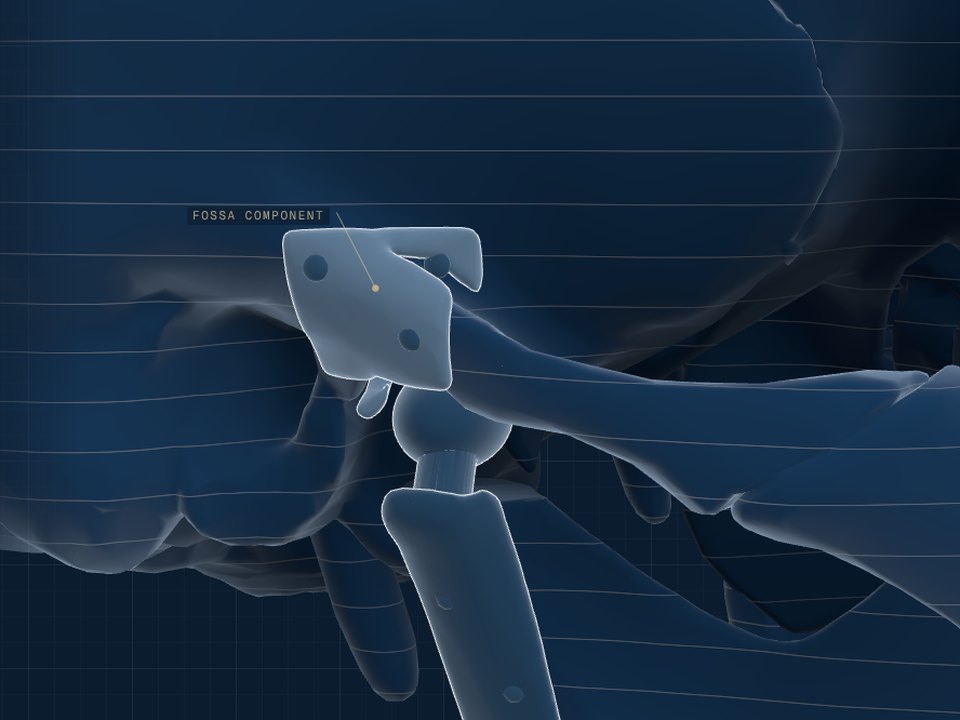
Total TMJ replacement
A joint that can no longer be repaired, replaced with a prosthetic joint.
No referral?
No referral? No problem.
Write, and you will be pointed to the right next step. Appointments are scheduled through MUSC Health (843-792-2094, option 3); your orthodontist or dentist can also start the referral.
Get in touchPlease don't include medical details in a first message.